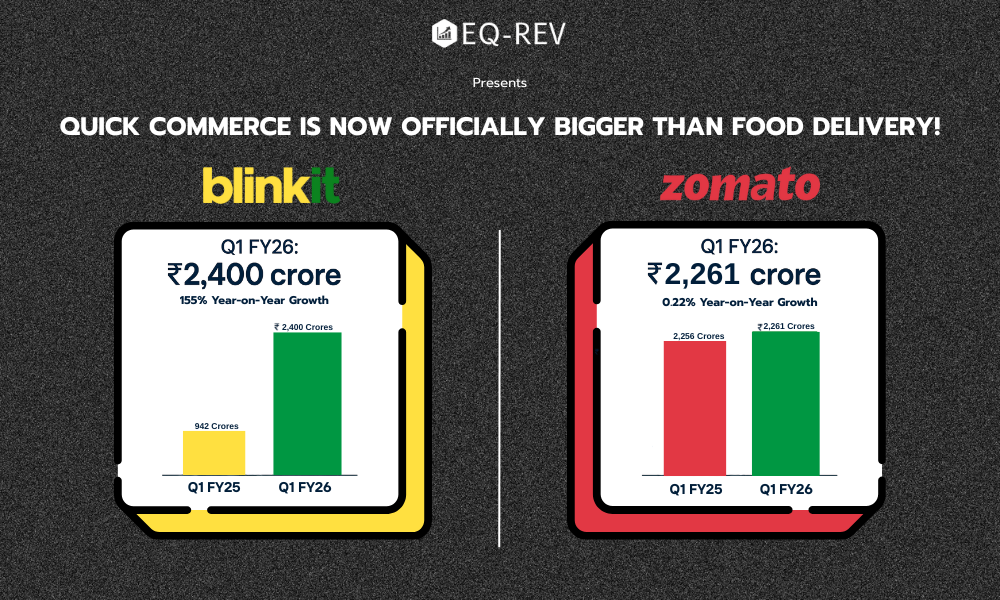
India’s Quick-commerce landscape just witnessed a historic turning point. For the first time ever, quick commerce is now officially bigger than traditional food delivery, driven by Blinkit’s explosive growth in the April–June quarter of FY2026. Blinkit, Eternal Ltd’s (formerly Zomato) quick commerce arm, posted revenue of ₹2,400 crore in Q1, surpassing Zomato’s food delivery segment, which came in at ₹2,261 crore.
The Numbers: Blinkit Surges Ahead
- Blinkit Q1 Revenue: ₹2,400 crore (up 154% YoY).
- Zomato Food Delivery Q1 Revenue: ₹2,261 crore (up 16% YoY).
- Gross Order Value: Blinkit hit ₹11,821 crore vs Zomato’s ₹10,769 crore.
- Net Order Value: Blinkit’s ₹9,230 crore surpassed Zomato’s ₹8,967 crore.
- Eternal (Parent) Total Q1 Revenue: ₹7,167 crore, a 70% YoY jump, powered by Blinkit’s surge.
Why Quick Commerce Is Winning
1. Speed & Convenience
Blinkit and its competitors mastered ultra-fast delivery—groceries, essentials, and even electronics at your doorstep in under 30 minutes. Indian urban consumers increasingly prefer instant solutions as lifestyles become busier and mobile-first.
2. Dark Store Network Expansion
Blinkit added 243 new dark stores in Q1, reaching 1,544 stores and enabling hyperlocal delivery across metros and Tier-2 cities. This infrastructure allows rapid order fulfillment and higher inventory efficiency.
3. Tech-Driven Logistics
Investments in AI-powered route optimization, smart warehousing, and real-time demand analytics have allowed quick commerce platforms to maintain high order fill rates and minimize delivery times.
4. Changing Consumer Habits
Quick commerce met India’s skyrocketing demand for instant groceries, personal care, and home essentials. Mobile penetration and digital adoption fueled rapid customer acquisition—the quick commerce market itself is projected to reach ₹2 lakh crore by FY28.
Impact on the Food Delivery Segment
Though Zomato’s core food business grew 16% year-over-year, it lost both revenue and order value leadership to quick commerce. Growth was slower, and sequential gains tapered (only 10% Q-on-Q). Consumers now prefer ordering daily essentials alongside occasional meals, placing convenience above menu choices.
What Does This Mean for Brands & Sellers?
- Stock Visibility Is Crucial: Innerwear, electronics, and FMCG brands should optimize SKUs for quick commerce platforms to ensure high visibility and fast-moving inventory.
- Pricing Strategies: Competitive pricing and cashbacks adapted for flash sale formats further enhance conversion rates in quick commerce vs. regular food delivery.
- Marketing Shift: Digital campaigns are focusing more on hyperlocal and instant gratification—retailers should invest in slot-based offers and pop-up discounts targeting key urban clusters.
- Expansion Beyond Groceries: Blinkit’s roadmap includes pharmacy, electronics, and broader lifestyle integration, giving brands new channels for instant reach.
Competitive Dynamics and What’s Next
- Fierce Competition: Zepto, Instamart, JioMart, Flipkart Minutes, and Swiggy are all ramping up darkstore networks and logistics, vying for urban and Tier-2 expansion.
- Employment Boom: The quick commerce sector is driving job creation in logistics, warehousing, and delivery, with nearly 2.4 million blue-collar jobs forecast by 2027.
- Investor Sentiment: Brokerages and market analysts turned bullish on Eternal after Blinkit’s revenue breakout, pushing the parent’s shares to record highs.
The Takeaway: Quick Commerce is India’s New Growth Engine
Blinkit’s landmark Q1 makes quick commerce the fastest-growing segment in Indian e-commerce, overtaking food delivery for the first time. Brands, marketers, and platforms must realign strategies to leverage the velocity, efficiency, and digital-first consumer mindset that defines this new era.
For anyone in Indian retail, digital marketing, or brand-building—quick commerce is no longer a side bet. It’s the primary battlefield.
Recommended Actions for Growth
- Ensure fill rates and SKU visibility on key quick commerce platforms.
- Adopt slot-based campaigns and pricing optimized for instant conversion.
- Leverage data-driven tools to track market dynamics and competitor strategies.
- Prepare for fierce competition, but build differentiated brand experiences based on speed and convenience.
The revolution is real: Blinkit just raised the bar. Quick commerce is here to stay, and it’s reshaping India’s digital economy—faster than anyone expected.